Talking on: The Handwritten Font with a Welcoming Voice
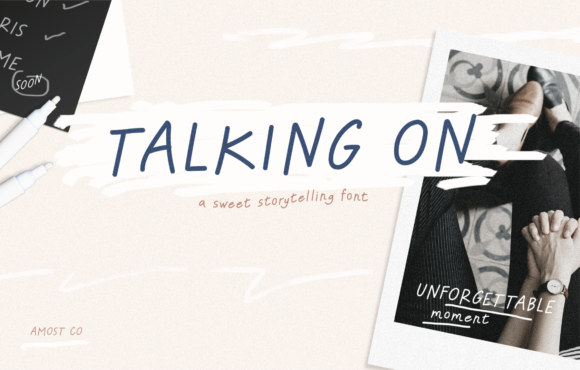
There’s a certain warmth to handwritten text that digital type often misses. It feels personal, like a note from a friend or a message scrawled on a café napkin. This is the exact feeling the Talking on font captures. It’s a sweet, friendly handwritten font designed to add a human touch to any project. Its natural, slightly imperfect style isn’t a flaw—it’s the feature that makes it so incredibly versatile. Whether you’re crafting a brand identity, designing social media posts, or creating wedding invitations, this typeface offers a voice that feels genuine and approachable.
A Typeface That Feels Like a Conversation
What sets Talking on apart in a sea of creative fonts? Its visual personality. The letterforms have a relaxed, flowing quality, as if written with a felt-tip pen. The connections between letters are smooth but not overly formal, striking a perfect balance between legibility and character. This isn't a wild, scratchy script that's hard to read; it’s a premium font built for real-world use. The slight variations in stroke width and baseline give it an authentic, handcrafted appearance that can instantly soften a design and make it more relatable.
This style makes it a fantastic choice for projects where you want to build an immediate connection with your audience. A display font like this works beautifully for headlines, short quotes, or logos where you need personality to shine through. It speaks a language of creativity, care, and approachability.
From Brand Identity to Packaging Design: Practical Applications
The true test of any design asset is how you can use it. Talking on excels across a wide range of applications, helping to unify the look and feel of diverse projects.
- Branding & Logo Design: For businesses in the wellness, lifestyle, bakery, boutique, or creative service sectors, this font can form the core of a friendly brand identity. Imagine it on a logo for a local florist, a yoga studio, or a handmade jewelry shop. It communicates care and personality before a customer even reads the words.
- Packaging & Merchandise: Product packaging needs to stand out and tell a story. Using this handwritten font on labels for artisan goods, coffee bags, or cosmetics adds a layer of perceived value and craftsmanship. It also translates perfectly to merchandise like tote bags, mugs, and t-shirts.
- Social Media & Digital Content: In the fast-scrolling world of Instagram or Pinterest, a distinct visual style is key. Talking on can be used to create consistent, eye-catching graphics for quotes, announcements, and stories. It helps your content feel more personal and less corporate, which can boost engagement.
- Invitations & Print Materials: For events, from weddings to workshop flyers, this font sets a warm, inviting tone. It’s also excellent for thank-you cards, stationery, and menu designs in the hospitality industry.
- Web Design & Blogs: Used strategically for headlines or pull quotes, it can break up the monotony of standard sans serif or serif font body text, guiding the reader’s eye and adding visual interest to a page.
Pairing Fonts: Creating Harmony in Your Design
While Talking on is a standout typeface, it rarely works best in isolation. Smart font pairing is what elevates a design from good to professional. The goal is to create contrast and hierarchy.
As a general rule, pair a expressive script or handwritten font with something clean and neutral. A simple, geometric sans serif font makes an excellent companion for body copy, providing readability without competing for attention. Alternatively, a classic, understated serif font can add a touch of elegance when combined with the casual vibe of Talking on.
For example, you might use Talking on for the main logo and headlines, a clean sans serif like Montserrat for subheadings and body text, and a simple serif for captions. Always test your pairings in context. View them at different sizes and on various devices to ensure the hierarchy is clear and the overall effect is cohesive.
Readability and Practical Considerations
A beautiful font is useless if people can’t read it. One of the strengths of Talking on is its balance between style and function. However, like any script or handwritten style, there are best practices to follow.
Use it primarily for larger text sizes—think headlines, logos, and short phrases. Avoid setting long paragraphs of body copy in a script font, as this can strain the reader’s eyes. Pay close attention to letter spacing (tracking) and line spacing (leading) to ensure the text has room to breathe. Most premium font packages, including this one, often include multiple styles like Regular, Bold, or Italic, giving you flexibility for emphasis and hierarchy.
Before finalizing any project, it’s crucial to test the font in its intended environment. Print a sample, view it on a smartphone, or mock up a webpage. This practical step helps you catch any readability issues early.
Making the Most of Your Font License
If you’re considering using Talking on for commercial work—a client’s logo, a product you sell, or marketing materials—always verify the licensing terms. A commercial font license specifies how you can legally use the typeface. Typical licenses cover use in digital and print projects, but they may have restrictions on embedding in apps or using it in products for resale. Reading the license agreement ensures you’re using the font correctly and protects both you and your clients. This is a standard part of professional modern typography practice.
Ultimately, the only limit with a font like Talking on is your imagination. It’s more than just a collection of letters; it’s a tool for visual storytelling. By understanding its personality and applying it thoughtfully to your brand identity, packaging, or social media, you can create designs that don’t just look good—they feel authentic and connected.