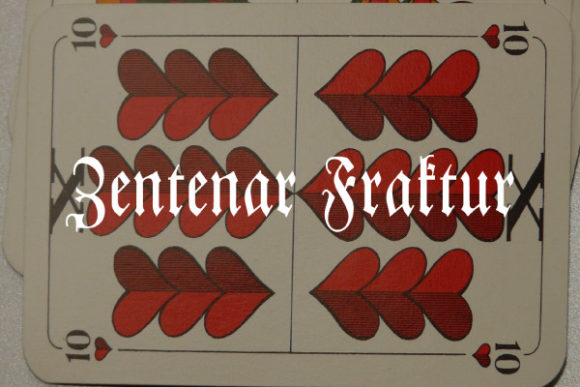
Zentenar Fraktur: A Modern Blackletter for Bold Brands
There's a certain kind of project that demands more than just clean lines and safe choices. You're designing a logo for a craft brewery that wants to honor tradition, creating a label for an artisanal hot sauce, or developing a social media campaign for a boutique clothing line with a distinct edge. In these moments, you need a typeface with history, character, and the power to make an immediate visual statement. This is where a font like Zentenar Fraktur enters the conversation, offering a bridge between the rich legacy of blackletter calligraphy and the demands of contemporary design.
The Visual Character: More Than Just Old-World Charm
At first glance, Zentenar Fraktur presents the hallmark features of a Fraktur typeface: the fractured, angular strokes, the intricate ligatures, and the undeniable sense of craftsmanship. But this isn't a simple digital replica of a 19th-century typeface. Created by designer Peter Wiegel, it possesses a refined elegance and consistent weight that make it remarkably versatile. The characters feel substantial and deliberate, with a visual rhythm that draws the eye without becoming illegible. It’s a premium font that carries the gravitas of history but is built with modern applications in mind.
The true strength of this display font lies in its duality. It can evoke a sense of heritage, reliability, and authenticity—perfect for brands that want to convey time-tested quality. Simultaneously, its sharp, graphic forms can feel incredibly contemporary, edgy, and bold, aligning with brands that want to project confidence and a distinct point of view. This makes it a powerful tool in a designer's toolkit for projects that need to stand out in a crowded visual landscape.
Practical Applications: From Screen to Print
Understanding where a font like this truly shines is key to using it effectively. Its high-contrast, decorative nature means it functions best as a headline or accent font, not for body copy. Think of it as the visual equivalent of a headline act—it commands attention and sets the tone, while supporting fonts handle the detailed information.
- Branding & Logo Design: For a craft distillery, a vintage barbershop, or a heavy metal band, Zentenar Fraktur can form the core of a memorable logo. Its distinct silhouette ensures instant recognition, helping to build strong brand identity from the first impression.
- Packaging & Labels: On a bottle of artisanal coffee or a packet of heritage seeds, this typeface adds a layer of perceived quality and tradition. It communicates that the product inside is made with care and attention to detail.
- Editorial & Poster Design: Magazine covers, book titles, and event posters benefit from its dramatic flair. A single word set in Zentenar Fraktur can become a striking focal point that anchors the entire layout.
- Digital & Social Media: For Instagram graphics, YouTube thumbnails, or website hero sections, a bold blackletter font cuts through the noise. It’s particularly effective for creating thematic consistency in a feed or establishing a strong header for a blog post on topics like history, craftsmanship, or niche hobbies.
- Merchandise & Invitations: From t-shirts and hats to wedding invitations with a gothic theme, the font adds a personalized, bespoke feel that generic sans serifs cannot match.
Integrating a Bold Typeface into Your Workflow
Adopting a specialized font like this requires a thoughtful approach to ensure it enhances rather than overwhelms your design. Here are some practical considerations for making it work.
Pairing with Purpose: The key to using a strong display font is pairing it with a complementary typeface. A clean, geometric sans-serif font can create a beautiful contrast, allowing Zentenar Fraktur's personality to pop while maintaining overall readability. Alternatively, a simple, modern serif font can bridge the historical gap for a more cohesive, yet still dynamic, look. Always test your font pairings in context to see how they interact at different sizes.
Mind the Context and Readability: This is not a font for setting long paragraphs. Its intricate details are designed for impact at larger sizes. Use it for headlines, logos, and short, impactful phrases. Always prioritize readability—ensure the text is legible against its background and consider the viewing distance for print materials. A beautiful design is useless if the audience can't decipher the message.
Leverage the Full Character Set: One of the standout features of this creative font is that it is PUA encoded. This is a practical advantage for any designer or crafter. It means all the special characters, swashes, and alternates are fully accessible in any software, including basic programs like Silhouette Studio or Cricut Design Space. You don't need advanced design software to unlock the font's full potential, making it a valuable asset for both digital and physical craft projects.
Understand the Licensing: As with any commercial font, it’s crucial to review the licensing terms before use. Ensure the license covers your intended use, whether it's for a personal blog, a client's logo, or mass-produced merchandise. This due diligence protects you and respects the work of the type designer.
A Tool for Distinctive Visual Communication
Ultimately, Zentenar Fraktur is more than just a collection of glyphs; it's a design asset for telling a specific kind of story. It’s for the designer who wants to inject authenticity into a brand, the entrepreneur aiming to package a product with undeniable shelf appeal, or the content creator seeking to give their digital presence a unique and memorable voice. By understanding its visual weight, pairing it wisely, and applying it to the right contexts, you can harness its historical charm and bold character to create designs that don't just communicate, but truly resonate. In a world of homogeneous typography, choosing a font with this much personality is a deliberate step toward crafting a more compelling and recognizable visual identity.